


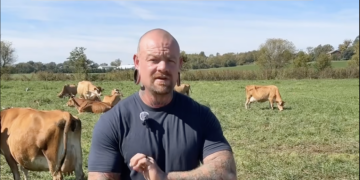





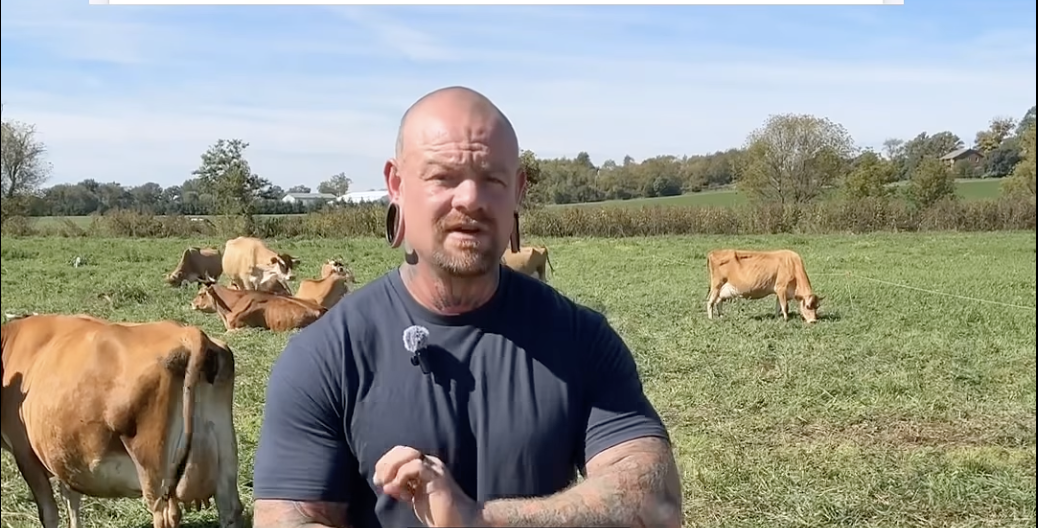
EAST TROY, Wis. — Chaz Self has been milking cows on the same stretch of Walworth County pasture since Thanksgiving 2017. For most of the last six years, he says, the state was fine with how he ran it.
That changed this spring. The Wisconsin Department of Agriculture, Trade and Consumer Protection suspended Grassway Organics’ milk license in April without changing the standards, and Self says the agency has proposed a $10,000 penalty plus $50 for every day the farm keeps running. He won’t get a hearing to fight it until May 2027.
“All of a sudden, they flipped a switch and said, ‘Now you’re illegal,'” Self told TMJ4.
Now he’s taking the fight to court. On Sept. 28, Grassway Organics Cooperative sued DATCP and Secretary Randy Romanski, an appointee of Gov. Tony Evers, in Walworth County Circuit Court. The farm is asking a judge to put the agency’s orders on hold until the case is heard. As of early this week, the court had not ruled on the request.
Self’s trouble with the state started almost as soon as he did. In early 2018, Self appeared in “Rotten,” a Netflix series about food safety. He told food writer David Gumpert in 2023 that two DATCP inspectors showed up at the farm the Monday after the episode aired. DATCP wanted about $3,500 in upgrades to his milking parlor, and Self agreed to make them. They also wanted him to sign a promise to stop selling raw milk. Self wouldn’t. That March, his milk processor, Westby, declined to renew his contract.
In 2020 the inspectors came back, this time with another cease-and-desist agreement and talk of criminal charges, according to Self. Instead of fighting, Self and attorney Elizabeth Rich brought the department a proposal: a member-owned cooperative tied to his Grade A license. Self says DATCP agreed and gave him his license back.
“They really worked with us,” he told Gumpert.
In the years since, the farm has grown. The Self’s now milk about 50 cows on roughly 640 acres. Grassway has been listed with the Raw Milk Institute since 2020 and posts its bacteria test results online, and the Self’s say it was the first dairy in Wisconsin to carry raw milk liability insurance.
Then, on March 18, DATCP issued a special order demanding changes to how Grassway does business. The farm asked for a hearing. On April 21, the department suspended the milk license, and the farm asked again.
That hearing is set for May 24-26, 2027, in Waukesha County, according to the Farm-to-Consumer Legal Defense Fund, a national group backing the farm. That’s more than a year after the license was pulled. The fund argues that enforcing the orders before anyone has heard the farm’s side violates due process.
The whole fight turns on one phrase in the state code. Wisconsin bans selling raw milk to the public, but the rule, ATCP 65.52, makes an exception for anyone with a “bona fide ownership interest” in a dairy farm licensed to a business. DATCP’s guidance says cow shares and herd shares don’t count, and neither does buying in just to get milk. It doesn’t say what does count.
According to the farm’s website, Grassway members pay $250 for an ownership interest, plus $10 a year, and share in operating costs. The Selfs say that makes the members owners under the rule. DATCP hasn’t said publicly why it disagrees.
Megan Self, Chaz’s wife and partner in the farm, put it plainly in the online fundraiser she started to cover legal bills: “The rule never changed.” The Legislature hasn’t amended it, she wrote, and the department never went through rulemaking to define it.
The Selfs say they’ve spent more than $10,000 on lawyers so far. If the daily penalty holds, keeping the farm open would cost them more than $18,000 a year on top of the $10,000 forfeiture. The fundraiser had brought in more than $58,000 by early October.
On May 11, three weeks after suspending Grassway’s license, the same department listed Self as an eligible candidate for the Dairy Farmers of Wisconsin board, a spot open only to producers who meet the program’s criteria. The board election is run separately from milk licensing.
Self’s fight is playing out as Wisconsin’s small farms keep disappearing. The state had 4,991 licensed dairy herds on Aug. 1, according to federal figures, the first time the count has dropped below 5,000. A year earlier there were 5,222. Self told TMJ4 that the big farms keep swallowing the small ones, and that raw milk is one of the few ways a farm his size can turn a profit.
DATCP did not respond to True North New’s request for comment before its deadline.
Health officials have long argued that pasteurization keeps people safe. The CDC says careful farming lowers the risk of contamination in raw milk but can’t eliminate it. Nothing in the public record reviewed for this story links any illness to Grassway.
The farm has also been to court before, under different owners. In 2014, a state appeals court ruled against Wayne and Kay Craig, who ran Grassway before the Self’s, over a raw milk arrangement run through a farm store. The Selfs took over in 2017 and built a different model.
Unless a judge steps in, the Self’s are left with two bad options: keep running the farm while the fines stack up, or cut off milk to their members and wait until next May to make their case.
Either way, the cows still have to be milked.