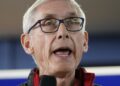
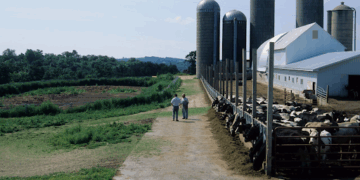





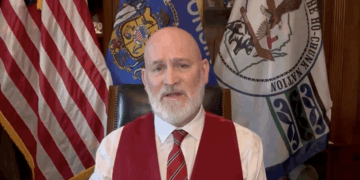











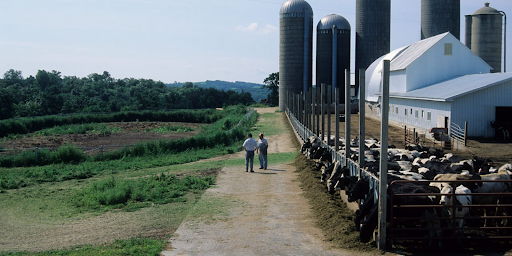
On Tuesday, Evers said he’s “very concerned” about increased Immigration and Customs Enforcement (ICE) activity across the Midwest and particularly in Wisconsin, where he claims agriculture would suffer if undocumented workers were removed.
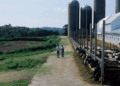
Evers cited a University of Wisconsin-Madison School for Workers survey estimating that roughly 70 percent of labor on Wisconsin dairy farms is performed by workers living in the country illegally. He warned that the state’s economy could be “destroyed” if undocumented workers were forced to leave.
This argument comes amid longstanding frustration over federal immigration policy and state leadership. Rather than demanding action to secure borders, tighten job-authorization, or advocate for legal paths that ensure both worker rights and enforcement, Evers appears focused on defending his status quo.
A study from UW-Madison said that many dairy farms depend heavily on undocumented labor. Survey data indicated that an estimated 10,000 undocumented workers perform about 70 percent of Wisconsin’s dairy labor. Nationwide, USDA stipulates that a significant portion of farmworkers lack legal work authorization, 42 percent of hired crop farmworkers were unauthorized as of 2022. (RELATED: “People Live in Homes, Not Corporations”: Trump Targets Wall Street Housing Takeover)
These labor issues stem from an outdated federal visa rule that excluded dairy work from temporary agricultural visas. Evers didn’t advocate for visa reform or enforcement that put farm needs first, rather arguing that state enforcement should take priority over federal immigration policy. This stance has now resulted in un-protected, illegal workers instead of documented workers who can provide stability to dairy farmers.
Data shows that around 70,000 undocumented immigrants live in Wisconsin, with tens of thousands in the workforce across sectors. Yet Evers’ focus on avoiding deportations all together does little to address his broader policy that enabled the current workforce situation in the first place. (RELATED: US Interest in Greenland: Geopolitical Implications and Arctic Strategy)