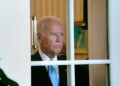


















Gov. Tony Evers on Dec. 5 vetoed legislation that would have modestly expanded the number of cigar bars in Wisconsin, arguing it posed a public-health risk despite the fact that the state’s indoor smoking ban would have remained unchanged. Supporters of the bill noted that the proposal only applied to designated cigar lounges, raising debate over whether the governor’s justification aligned with the bill’s actual scope.
The bill vetoed by the governor would have allowed existing taverns to sell cigars and pipe tobacco, which customers could smoke on the bar’s property. The governor argued that if the bill moved forward, taverns could impose a significant health risk on Wisconsinites through second hand smoke inhalations.
“Wisconsin’s smoke-free air law was enacted over 15 years ago to ensure that everyone has the right to breathe clean air while at work and in public places,” Evers said in his veto message. “This public policy was a critically important step forward for keeping kids, families, and communities healthier and safer, improving public health and, most importantly, saving thousands of lives.”
Evers justified his veto with his own experience as a former tobacco user. “As a former smoker and esophageal cancer survivor, I cannot in good conscience reverse course on that important step for public health, safety, and well-being by restoring indoor smoking in certain public spaces,” Evers mentioned.
Currently, because of an indoor smoking ban enacted by the state in July of 2010, Wisconsin only allows cigar bars that were operational prior to the end of 2009 to be open for business, preventing new small business owners from opening a cigar lounge.
The bill, which was first introduced by the state legislature in 2023, faced significant pushback from health advocates such as the American Cancer Society Action Network, the Children’s Hospital of Wisconsin and the American Heart Association, who noted the risk increased indoor smoking poses to public health and the encouragement it presents to further public smoking.
Supporters of the legislation however, included small business owners and those who wish to operate cigar bars, who argued that cigar bars could bring a significant income stream to the local economy. (RELATED: Wisconsin Lawmakers Push for Gas-Tax Transparency and New IVF Tax Credit)
“This isn’t changing the smoking ban,” said State Senator Cory Tomczyk during the Senate floor session Tuesday. “This is just allowing for some expansion of cigar bars. It’s still an economic decision that’ll be made by those people that wish to try to have a cigar bar.”
Twelve states nationwide – Alabama, Arkansas, Georgia, Kentucky, Mississippi, Missouri, Oklahoma, South Carolina, Texas, Virginia, West Virginia, and Wyoming – lack a statewide ban on indoor smoking, which have generated significant revenue from the cigar lounge industry as a result. Twenty-eight states, including Wisconsin, have enacted an statewide indoor smoking ban. (RELATED: Wisconsin Crime Labs Face Financial Strain Resulting in Longer Turnaround Times)
As it stands, revenue for cigar lounges is expected to climb at a CAGR of 5.2% to $1.2 billion throughout the United States through the end of 2025, despite a forecast dip of 0.4% in 2025 alone.
Individual cigar lounges are expected to bring in an average of around $40,000 to $80,000, with some easily surpassing $100,000, depending on the products offered and local market.