












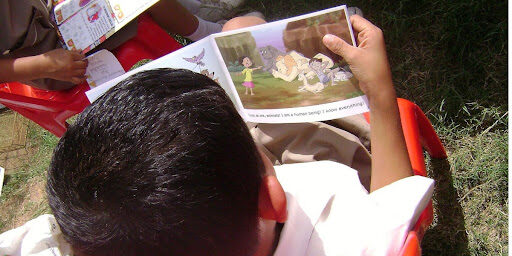
The Wisconsin Department of Public Instruction (DPI) announced that more than 36 percent of 4K through third grade students fell below the 25th percentile for reading, during its annual literacy screenings this week.
This first annual report with data covering the school year 2024 through 2025 revealed that 39.2 percent of students in grades 5K through third began receiving intervention as a result of the testing and around 150 more students were recommended for intervention. This accounts for well over 86,000 students requiring additional literacy support.
In 2023, Wisconsin Act 20 passed as a response to previously low reading rates requiring schools to make major changes to English Language Arts education. These changes included literacy screenings to identify “at-risk” students. “At-risk” students are given “Personal Reading Plans (PRP) with tailored goals to establish and improve reading comprehension and achieve grade-level literacy skills.
According to DPI, $50 million has been appropriated from the 2023-25 state budget to abate literacy concerns. The funding, which was withheld until 2025 due to disagreements between lawmakers and Gov. Tony Evers, is being used for professional development, training requirements, and curriculum.
With nearly 40 percent of elementary students in Wisconsin needing extra support and state-mandated intervention doing little to mitigate the issue, critics took to social media to express concern about the established curriculum and measures. (RELATED: Ron Johnson Won’t Sue Feds Over Secret Phone-Record Seizure — For Now)
Over the past several years, DPI has changed educational standards in an attempt to equalize opportunity for students statewide. With some of the widest equity gaps in the country, Wisconsin responded to the abysmal educational data from the year 2022-2023 with Act 20.
The legislation mandated teaching literacy through phonics rather than Meaning Structure Visual (MSV) instruction in what they describe as a “science-aligned literacy.” Further instruction for Wisconsin’s reading and writing development is created through the Early Literacy Curriculum Council (ELCC) of nine members, which still appears to be under consideration, according to their website.
Education State Superintendent Jill Underly said in a statement that school districts were working steadily towards literacy improvement. “This first report provides us with a baseline, showing where students performed in a standardized assessment given at one point in time,” State Superintendent Dr. Jill Underly said. “These data are critical in helping schools guide instruction and intervention — not to define a student’s potential.”
In the county of Milwaukee, around 23 percent of adults are at or below the lowest literacy level, according to the Barbara Bush Foundation for Family Literacy. Research shows that extended illiteracy results in higher rates of poverty and compromised health conditions.
In regard to the state’s literacy concerns Michele Erikson, Executive Director of Wisconsin Literacy, Inc., a nonprofit aimed at strengthening literacy statewide said “If we do nothing to improve the literacy, numeracy, and digital problem-solving skills of Wisconsin’s workforce, we will see a decline in the earning power of its residents and the growth of its economy. We need to look at raising literacy levels.”