
















For years President Donald Trump has expressed interest in a US takeover of Greenland, the autonomous Arctic territory ruled by Denmark, and it is closer to reality than ever before with the U.S. Secretary of State Marco Rubio meeting with Danish officials next week.
The conversation about his interest in the remote island in the North has intensified with U.S. military operation of Venezuela and capture of its president Nicolás Maduro on January 3, 2026. As geopolitical stability shifts around this regional shock, the Trump administration alluded that establishing a secure foothold in Greenland is a “national security necessity” to protect the Arctic from potential Russian and Chinese aggression.
International Response to Greenland Annexation
According to a statement previously posted to Greenland’s government website, Danish Foreign Minister Lars Løkke Rasmussen and his Greenland counterpart, Vivian Motzfeldt, requested a meeting with Rubio, but were initially denied. The Wall Street Journal first reported that Rubio stated the administration’s plans to purchase Greenland, with no intention of using military force.
In response to the claims, Danish Prime Minister Mette Frederiksen released a statement saying she “made it very clear where the Kingdom of Denmark stands, and that Greenland has repeatedly said that it does not want to be part of the United States.”
Public tension spiked further when Katie Miller, wife of White House Deputy Chief of Staff and Homeland Security Advisor Stephen Miller, alluded to the administration’s Greenland aspirations again when she posted a map of the country on social media with the American Flag and the caption “SOON.”
Even Senator John Fetterman (PA-D) conceded the strategic importance of U.S. dominance over Greenland. However, he supported the Trump administration’s proposal to finance the Arctic Island. (RELATED: “People Live in Homes, Not Corporations”: Trump Targets Wall Street Housing Takeover)
“America is not a bully. Ideally, we purchase it—similar to our purchases of Alaska or the Louisiana Purchase,” Fetterman wrote in a statement on the social platform X.
“Greenland belongs to its people. It is for Denmark and Greenland, and them only, to decide on matters concerning Denmark and Greenland,” read the joint statement from President Macron of France, Chancellor Merz of Germany, Prime Minister Meloni of Italy, Prime Minister Tusk of Poland, Prime Minister Sánchez of Spain, Prime Minister Starmer of the United Kingdom and Prime Minister Frederiksen of Denmark on Greenland.
Geopolitical Implications
As the annexation of Greenland feels more tangible than ever, the international community has scrambled to understand what implications this move would mean geopolitically. Under the NATO Treaty and UN Charter, mutually-ensured sovereignty and border-protection are ensured. Critics of the Trump Administration’s interest in Greenland allege annexation of the Arctic would violate the international Allied agreements, setting an ominous precedent.
Why Greenland?
For the Trump Administration, the annexation of the Arctic territory is in the best interest of both American and international interests. The resource-rich 836,000 square-mile island sits in a strategically-located intersection for military access to Russia. While the Russia-Ukraine War rages on, the U.S. is eager to stamp out the possibility of this regional conflict spreading. Critics argue that the U.S. has had military bases in Greenland since its establishment in 1951 and there is nothing stopping a growing military presence.
Additionally, Greenland sits atop a vast supply of oil, gas and rare earth minerals. Access to these valuable resources would give the U.S. a strategic upper-hand as China currently leverages its domination of the rare earth industry. In the midst of a collapsing Western economy, these resources offer an alternative energy solution, as they are required to manufacture everything from electric cars and wind turbines to military equipment.
As the icy island melts over the next few years from climate change, Greenland stands to become a key strategic passageway for shipping and maritime trade between the U.S., Europe and the United Kingdom – the GIUK Gap. In a race for regional power and security, the U.S. is eager to secure that stronghold for economic reasons.
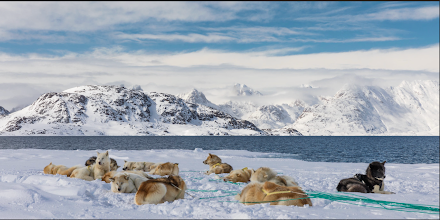
Greenland is the world’s least densely populated country, its nearly 57,000 residents predominantly travel its rugged icy terrain by boat and helicopter along the Western coast. Outside of the industrialized towns, the 90 percent indigenous Inuit population called Kalaallit, survive by fishing. (RELATED: Trump Administration Grants Iowa Historic Control Over Federal Education Funding)
Greenland residents have largely expressed frustration at the American bid, but also want to divest from Danish leadership, according to a poll from early 2019. According to the poll, 67.7 percent of all adult Greenlanders support the vision of Greenland as an independent state and believe this is the pathway to ultimate self-determination. Greenland’s website offers pathways for continued business and strategic partnership, but the Greenlanders overwhelmingly insist on being their own people.