
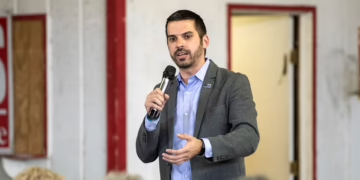








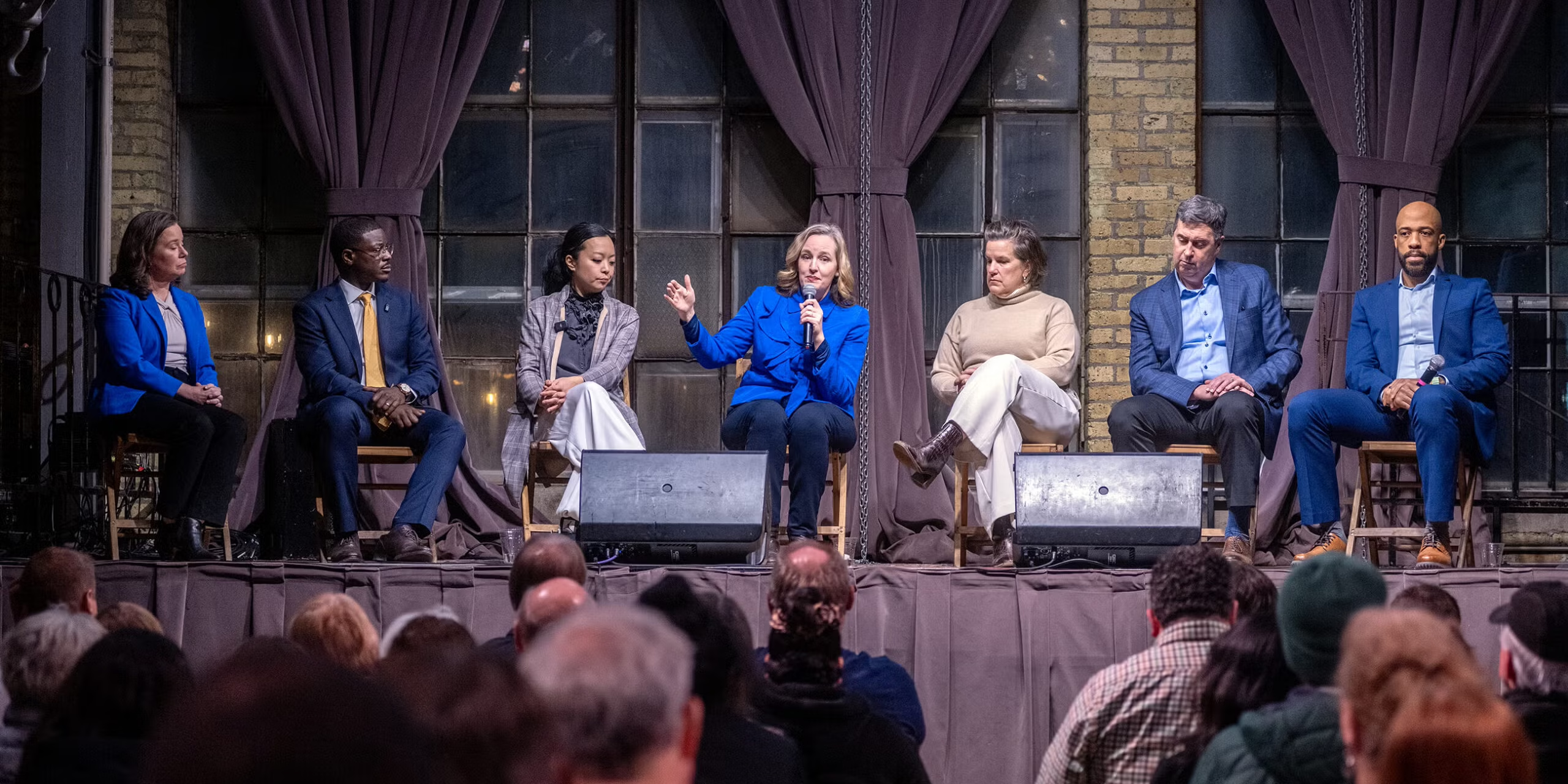
Wisconsin’s top gubernatorial candidates weighed in on key issues like in the open-seat race at a small business forum on January 21st.
The group included Lt. Gov Sara Rodriguez, Milwaukee County Executive Director David Crowley, state representative Francesca Hong, state senator Kelda Roys, former Wisconsin Economic Development Corporation CEO Missy Hughes, former Lt. Gov. Mandela Barnes, and former Department of Administration Secretary Joel Brennan. They discussed topics ranging from healthcare, economic development, and taxes, which all remain at the forefront of the race. This appearance marks the first time since the democratic field has been on-stage together ahead of the primary election set for August 11th.
The event was hosted by Main Street Action and Civic Media, along with support from event space from the Cooperage. The discussion was moderated by Dan Shafer, who publishes “The Recombobulation Area,” a political column on Substack and political editor at Civic Media. Local entrepreneurs and businesses also engaged in the conversation with questions.
Here’s a few highlights and how they landed:
Healthcare
En-masse the governor-hopefuls expressed interest in expanding BadgerCare’s healthcare availability. Hong, Rodriguez, Crowley, and Roys specifically stated intention to create a widely-accessible public option of the plan. According to recent polling data, as many as 284,000 Wisconsinites or 5.3 percent of the population does not have health insurance.
If a new governor sought to create a public health insurance program, it would require significant initial state funding and depending on who the plan attracts, the cost could exceed premiums leading to long-term financial strain on the state budget. They may also face challenges from the republican-led legislature and opposition from the healthcare industry aiming to keep costs low. Roys also argued that she would support an extension of the Family Medical Leave Act (FMLA) on behalf of new families.
Taxes
When asked about tax changes, the democratic field had a variety of responses.
Unequivocally, Barnes said the wealthy and corporations would be seeing a tax increase under his administration, “The wealthy have gotten away without paying their fair share for too long. Corporations are making historic sums of wealth.”
Hughes and Brennan pushed back on a holistic tax increase in favor of economic development on a whole in a functioning government. (RELATED: Wisconsin Joins Lawsuit Urging ICE to Scale Back Minnesota Operations)
“We’ve got to make sure we’re not ceding anything about operating government effectively and efficiently,” Brennan said.
Hughes emphasized a focus on sustainable financial growth, “My focus is going to be on a growing economy, because my fear is that if we simply increase taxes on the wealthy, the next team will get elected and come back in and take that away.”
Roys advocated for restoring a progressive taxation system, rolling back the tax credit scheme imposed by former Republican governor Scott Walker. His plan eliminated state income tax liabilities for manufacturers and agricultural businesses to supplement tax credits to wealthy individuals and corporations. Between 2011 and 2018, Walker’s series of tax cuts totaled nearly $8 billion, which critics argue negatively affected public education and the working class.
Crowley also remained resistant to the current system and proposed a comprehensive plan to evaluate the tax policies affecting Wisconsinites. He pushed back on what he called “tax credits for the millionaires and billionaires.” While the Wisconsin Earned Income Tax Credit (EITC) has hit families hard over the last several years, the current legislature remains unlikely to alter the system.
Education
Currently, 90 percent of Wisconsin school districts face a teacher shortage with complaints about low pay and difficult working conditions. The gubernatorial candidates will be tasked with addressing this critical situation. Hong attributed many of the staffing issues to Act 10, which dismantled teacher union rights and she pledged to appeal the ruling.
“Fully fund public education. Reimburse special education at 90% from the state, in parity with voucher schools,” Hong said and abolishing the voucher program “so we no longer siphon away resources from our public schools to private schools.”
Immigration
Among these critical issues the candidates also discussed recent federal immigration enforcement. Rodriguez insisted on agents wearing body cameras, identification, and no mask and forbidding them from sensitive areas like schools
“It is personal to me,” said Rodriguez, whose husband is a U.S. citizen born in Mexico.
Hong said she’s been cooperating with mutual aid groups in Minneapolis, while Roys pledged to prosecute agents to the full extent.
Many of the pivotal concerns continue to be firebrand issues in this decisive election. (RELATED: Wisconsin Governor Race 2026: Crowley Leads Democrat Fundraising Surge)