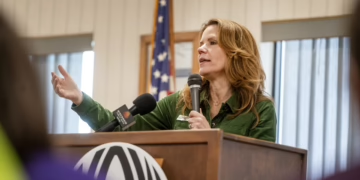












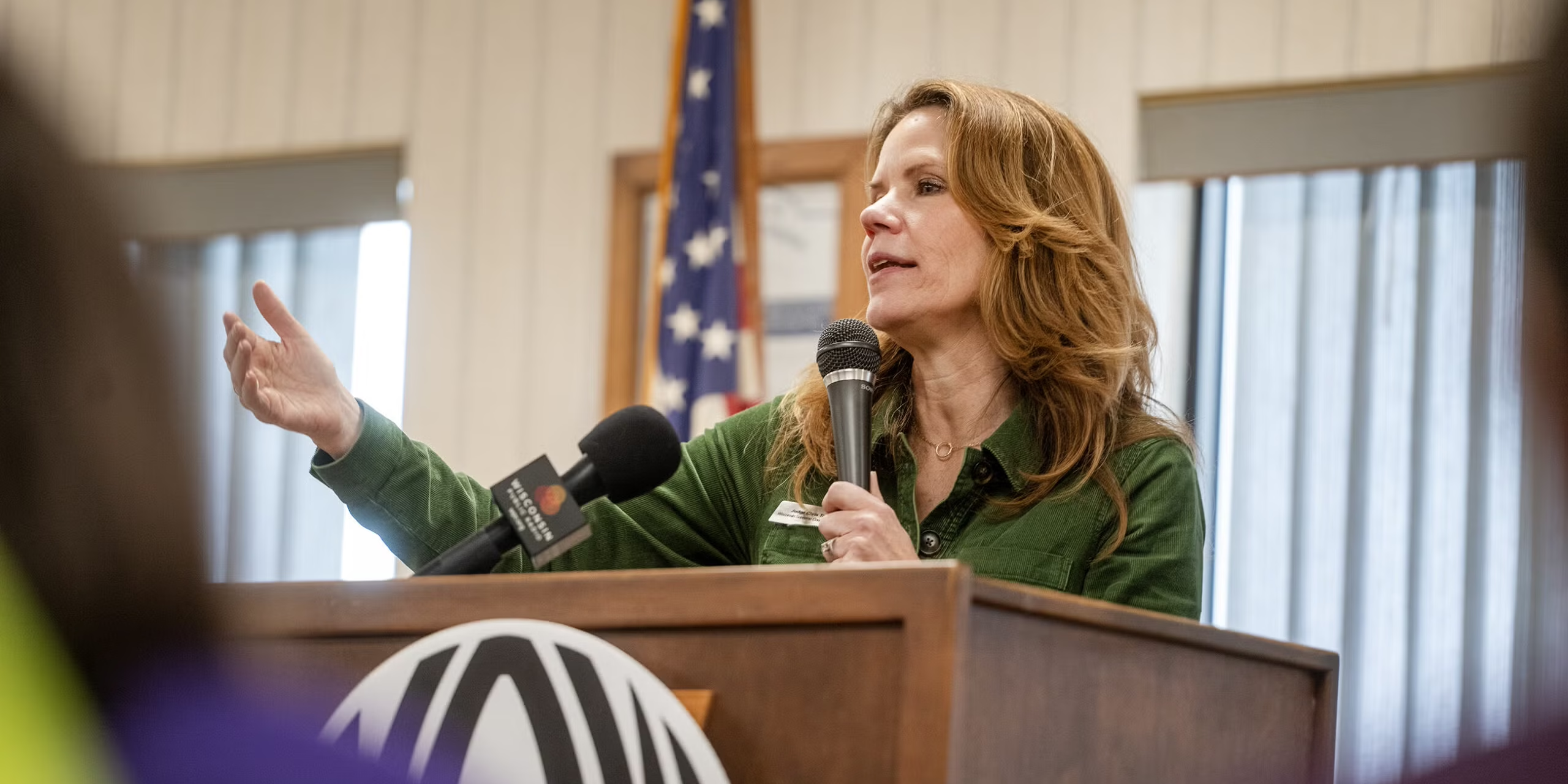
Wisconsin Supreme Court candidate Chris Taylor championed strict judicial recusal rules as a state legislator — but critics say she has repeatedly violated the spirit of those same rules by ruling on cases involving the Sierra Club, a group with which she has deep financial and ideological ties.
While serving in the Wisconsin Assembly, Taylor sponsored Assembly Bill 588, which would have required judges to disqualify themselves from cases if they or their campaigns received $1,000 or more from an involved party. The bill failed to pass.
Campaign finance records show the Wisconsin Sierra Club Education Committee donated $1,000 to Taylor’s first Assembly campaign in 2011. Taylor herself contributed $100 back to the committee in 2014. As a legislator, she was also a Sierra Club member and joined the group in opposing legislation to ease restrictions on new nuclear power plants, while backing measures aligned with the organization’s agenda — including evaluating the “social cost of carbon emissions.”
Under the very threshold she once proposed, those contributions alone could have triggered a recusal requirement. (RELATED: Kidney Stones Or Debate Dodge? Wisconsin Supreme Court Candidate Taylor’s Miraculous Recovery Raises Eyebrows)
Cases On The Bench
The Sierra Club has appeared before Wisconsin courts in cases involving natural gas plants, solar farm approvals, mining regulations, and pipeline projects. Taylor has participated in multiple cases where the group had a direct stake.
In 2022, Taylor was part of a three-judge panel that approved the Koshkonong Solar Energy Center — a ruling the Sierra Club publicly celebrated. “Today’s approval of the Koshkonong Solar Energy Center by the PSC is a significant step forward,” the group said in a news release following the decision.
Taylor’s Shifting Position
Taylor has distanced herself from her own legislative proposal during her Supreme Court campaign. In several interviews, she has said she no longer makes policy as a judge and instead supports reviewing recusal rules with public input, while insisting she decides recusals case-by-case under existing ethical rules.
Critics argue that position risks violating the Wisconsin Code of Judicial Conduct, which demands judges avoid even the appearance of bias or impropriety. While the code states that lawful campaign contributions alone do not require recusal, Taylor’s personal membership in the Sierra Club and the mutual financial history between the two create what critics call a deeper entanglement — one that goes well beyond a simple donation.
Taylor has not committed to recusing herself from Sierra Club cases if elected to the state’s highest court. (RELATED: Francesca Hong’s Pro-Prostitution Bill Sparks Firestorm as She Eyes Wisconsin Governor’s Race)
The Race
Taylor faces conservative Appeals Court Judge Maria Lazar in the April 7 election for an open seat on the Wisconsin Supreme Court. Lazar has campaigned on applying the law as written and has not faced similar conflict-of-interest questions during the race.