

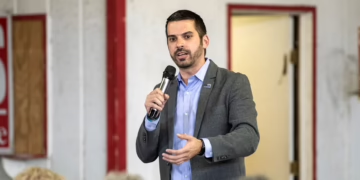










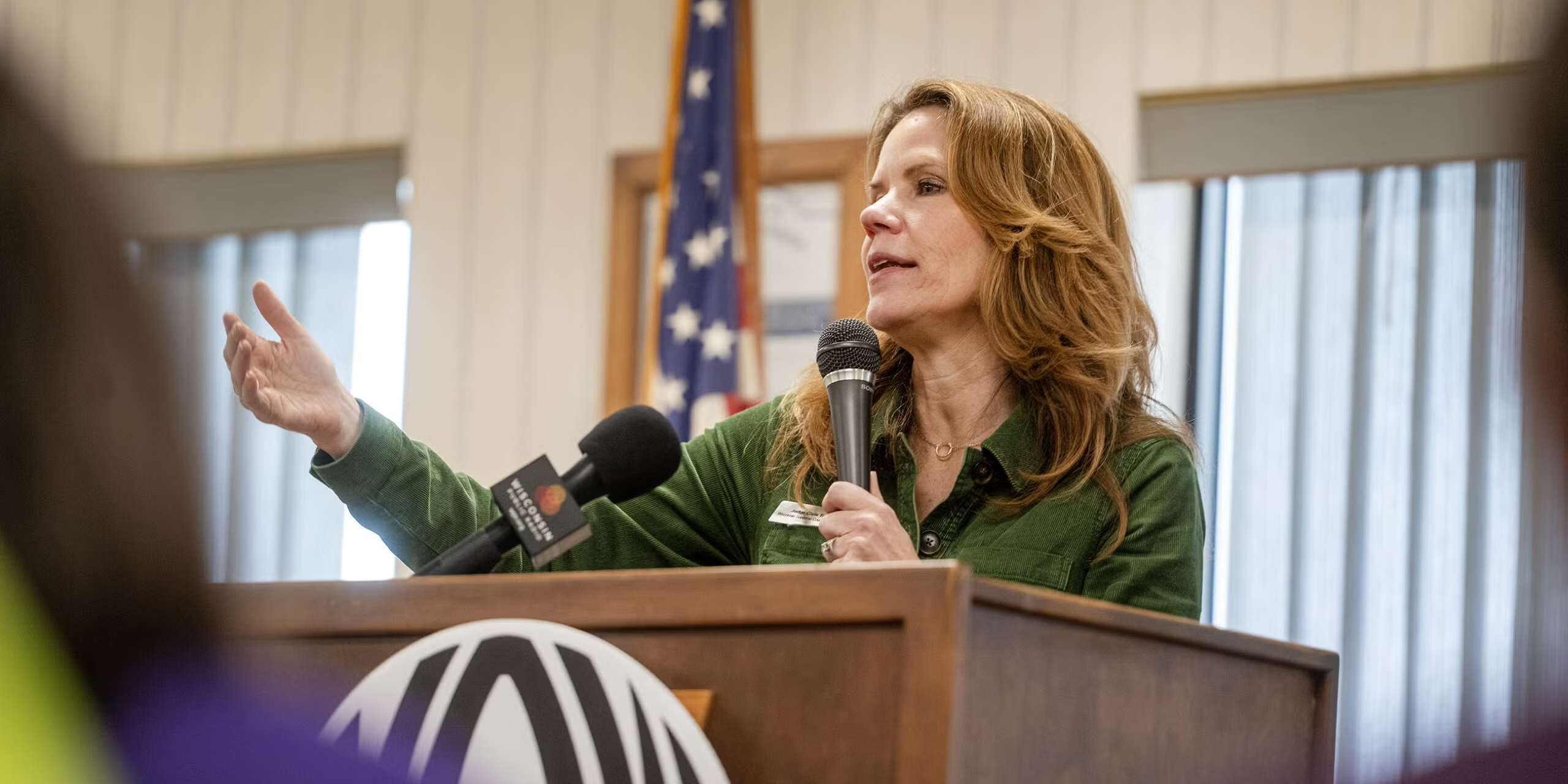
Chris Taylor built part of her legislative reputation on pushing for stricter judicial accountability — making her record on the bench all the more striking to critics who say she has repeatedly ruled on cases with a direct connection to one of her longtime political allies.
During her time in the Wisconsin Assembly, Taylor sponsored legislation that would have required judges to step aside from any case in which a party had contributed $1,000 or more to the judge or their campaign. Assembly Bill 588 never became law, but it established a clear marker for where Taylor once believed the recusal line should be drawn, as obtained by The Heartland Post.
The financial record between Taylor and the Sierra Club sits uncomfortably close to that marker. The Wisconsin Sierra Club Education Committee gave $1,000 to Taylor’s first Assembly campaign in 2011. Three years later, Taylor contributed $100 back to the same committee. Beyond money, Taylor held personal membership in the Sierra Club during her legislative career and aligned herself with the group’s agenda on multiple fronts — opposing measures to ease restrictions on nuclear power plants and supporting legislation to evaluate the social cost of carbon emissions.
Under the threshold Taylor herself once proposed, that history could have been enough to require her disqualification. (RELATED: Kidney Stones Or Debate Dodge? Wisconsin Supreme Court Candidate Taylor’s Miraculous Recovery Raises Eyebrows)
Cases On The Bench
The Sierra Club is a recurring presence in Wisconsin courts, having been party to or submitted comment in cases touching on natural gas plants, solar energy approvals, mining rules, and pipeline permitting. Taylor participated in multiple such cases during her time on the Appeals Court.
The most prominent example came in 2022, when Taylor sat on a three-judge panel that approved the Koshkonong Solar Energy Center — a project the Sierra Club had actively supported. The group issued a public statement welcoming the outcome as a meaningful step forward. Taylor did not recuse herself.
Taylor’s Shifting Position
On the campaign trail for the Supreme Court, Taylor has stepped back from her earlier legislative stance. She has told interviewers that her role as a judge is to apply existing rules rather than make policy, and that she evaluates recusal questions individually under the current Wisconsin Code of Judicial Conduct. She has expressed openness to revisiting recusal standards through a public process but has stopped short of committing to recuse herself from Sierra Club cases if she wins a seat on the high court.
The Wisconsin Code of Judicial Conduct prohibits not just actual bias but the appearance of it — a standard critics argue Taylor’s Sierra Club entanglement already implicates, given that the relationship extends beyond a single donation into years of shared membership, mutual financial support, and aligned advocacy.
Taylor has not committed to recusing herself from Sierra Club cases if elected to the state’s highest court. (RELATED: Francesca Hong’s Pro-Prostitution Bill Sparks Firestorm as She Eyes Wisconsin Governor’s Race