


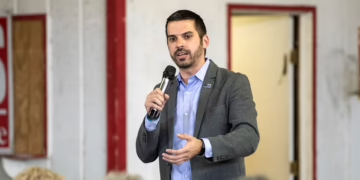















A bill that would strip criminal penalties from prostitution and formalize labor protections for sex workers is emerging as a flashpoint in Wisconsin’s Democratic gubernatorial primary — largely because its lead sponsor, Rep. Francesca Hong, is widely considered the frontrunner for the party’s nomination.
The legislation, co-introduced by Hong and other progressive members of the Assembly, would remove criminal exposure for adults engaged in prostitution, solicitation, or brothel operation. In its place, the bill would establish a formal framework of workplace rights for sex workers — covering minimum wage, overtime, workers’ compensation, anti-discrimination protections, and health benefits, mirroring the standards applied to conventional employment. Those operating as independent contractors in the sex trade would be recognized as legitimate business owners. The bill would also prohibit discrimination against sex workers in housing, healthcare, financial services, and public accommodations.
Hong has framed the measure as a harm-reduction effort, arguing that decriminalization reduces stigma and improves safety outcomes for people in the industry.
What the Research Actually Shows
Far from making women safer, Prostitution researcher Kat Banyard details how decriminalization financially benefits pimps, increases prostitution and trafficking, and causes greater harm to the women involved.She further documents how the sex industry amounts to institutionalized sexual abuse, in which women are required to perform sex acts many times a day — an unnatural situation causing physical damage — while being compelled to pretend to enjoy it, with most developing drug addictions to cope with the physical pain and emotional trauma.
Banyard also exposes a troubling reality about who actually runs pro-decriminalization advocacy groups. She argues these organizations are actually run by pimps, brothel owners, and traffickers — pointing to a spokeswoman for the International Union of Sex Workers who admitted this about her own organization at a formal hearing before Northern Ireland’s Justice Committee.
Perhaps most damning for Hong’s bill, Banyard methodically demolishes the myth that decriminalizing the entire prostitution trade makes women safe University of Rhode Island — drawing on real-world evidence from countries that have tried it. (RELATED: Rebecca Cooke Fundraises With ‘Sanctuary City Architect’ Rahm Emanuel Amid Immigration Controversy)
Conservative Backlash
The bill landed hard among Wisconsin conservatives. Radio host Vicki McKenna publicly called on Republican legislative leaders to oppose it, noting pointedly that the measure is being championed by the Democrat most likely to face the GOP nominee for governor. The criticism has centered not just on the bill’s content but on what opponents see as its implicit message at a particularly fraught moment: Milwaukee has become a significant hub for human trafficking activity, and strip club operators in the area have recently faced criminal charges connected to the crime.
Critics argue that extending labor law protections to sex work conflates coercion with consent, and that the documented patterns of addiction and violence in the industry cannot be dissolved simply by reclassifying prostitution as a regulated profession. Republican lawmakers and family-focused advocacy organizations have framed their opposition around the protection of vulnerable women, arguing Hong’s bill subordinates that concern to ideological priorities.