













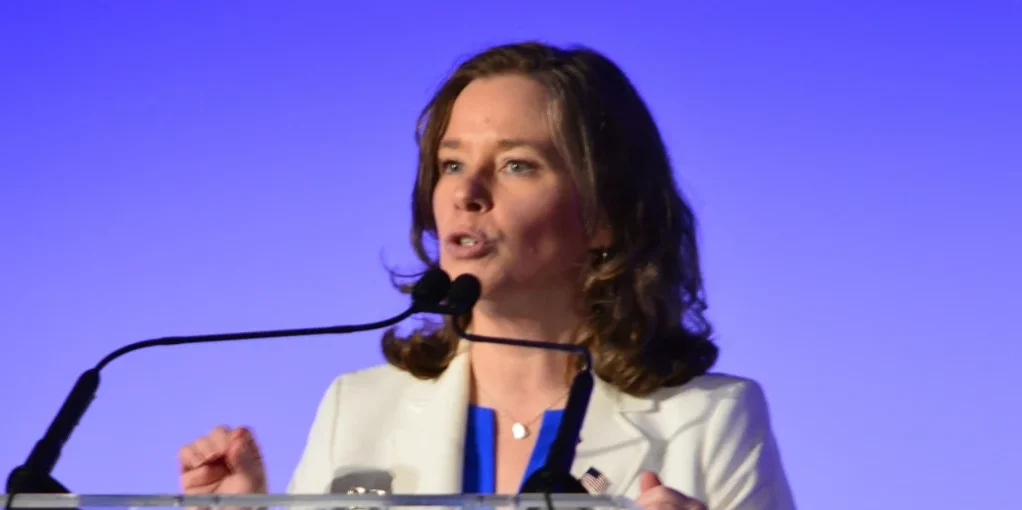
Wisconsin Lieutenant Governor Sara Rodriguez is pitching an expansive child care proposal as a centerpiece of her gubernatorial campaign — but the plan’s lack of financial specifics is drawing criticism from those who see it as policy theater rather than a serious legislative blueprint.
What The Plan Promises
Rodriguez’s proposal would cap family child care costs at 7 percent of household income. Any costs exceeding that threshold would be offset through state-funded “child care affordability grants.” The plan also includes an $18-an-hour minimum wage for providers funded by taxpayers, low-interest loans and grants to expand facilities in “underserved” areas, and promises to work with the Legislature on new taxes, trust funds, and public-private partnerships.
The campaign markets it as a “universal child care guarantee” — one that would apply to families across all income levels, including households earning as much as $500,000 per year.
What The Plan Is Missing
Despite the sweeping scope, the announcement came without a total cost estimate, a funding breakdown, a phase-in timeline, or any concrete mechanism for financing the program. Asked directly about the price tag, Rodriguez pointed to child care’s return on investment — a response critics note was unverified and sidestepped the question entirely. The plan also omits reimbursement rates, quality standards, and fiscal modeling.
The absence of detail is especially notable given that Republicans control the Wisconsin Legislature, making any path to passage unclear. (RELATED: Francesca Hong’s Pro-Prostitution Bill Sparks Firestorm as She Eyes Wisconsin Governor’s Race)
A Friendly Reception From The Press
The Milwaukee Journal Sentinel’s Jessie Opoien largely transcribed Rodriguez’s pitch without pressing for hard numbers, eligibility safeguards, or a realistic legislative path — particularly notable given that Republicans control the Wisconsin Legislature. The piece noted the absence of a price tag in a single sentence before moving on, offering readers no analysis of what such a universal subsidy might actually cost Wisconsin taxpayers, who already face some of the highest property taxes in the nation and the second-highest per-pupil K-12 spending in the country.
Political Context
Rodriguez is one of seven major Democrats competing for the party’s gubernatorial nomination. She has leaned heavily into her association with Governor Evers, framing her child care proposal as a natural extension of the $300 million his administration has already committed to the issue — including $123 million through the Wisconsin Shares subsidy program — and has made clear she is seeking his endorsement.
The timing carries its own irony: Governor Evers vetoed one of the proposed public-private partnerships central to Rodriguez’s pitch just last week. (RELATED: Rebecca Cooke Fundraises With ‘Sanctuary City Architect’ Rahm Emanuel Amid Immigration Controversy)
The rollout, however, came with an awkward wrinkle: just last week, Governor Evers vetoed one of the very public-private partnership models that Rodriguez’s plan depends on.