
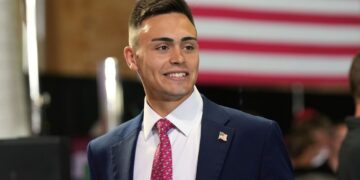

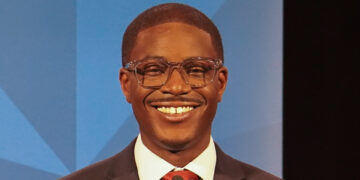




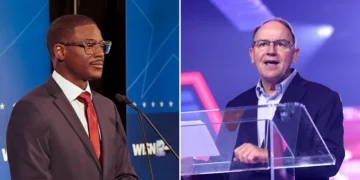
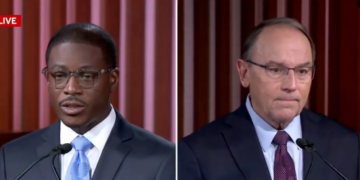




Democrat David Crowley has won Wisconsin’s 2026 gubernatorial election, defeating Republican Congressman Tom Tiffany in a closely watched race.
Crowley secured approximately 54% of the vote as of Wednesday afternoon, compared to Tiffany’s 46%, according to the New York Times. The victory makes Crowley Wisconsin’s first Black governor and extends Democratic control of the governor’s office following two terms under outgoing Gov. Tony Evers.
In late September, Marquette University Law School Poll said Crowley led Tiffany 49% to 46% among likely voters, with 5% undecided. The survey’s 4.8-percentage-point margin of error meant the contest remained in the air.
Previous surveys showed Crowley leading 49% to 44%, indicating Tiffany had narrowed the five-point deficit to three points. The FiftyPlusOne polling average on October 28 similarly favored Crowley, placing him at approximately 47.2% compared to Tiffany’s 43.4%.The final election results [compare with polling results].
In Milwaukee County, Crowley received 76% of the vote, while Dane County voters supported Crowley with 80% of the vote.
In August, Crowley narrowly defeated state Rep. Francesca Hong, winning approximately 39.8% of the vote compared to Hong’s 39.4%. Crowley’s primary victory followed a messy comeback after he suspended his campaign before returning with Evers’ endorsement.
During Crowley’s victory speech, he pledged to govern in a bipartisan fashion, acknowledging the state’s moderate disposition.
“Wisconsin isn’t a red state or a blue state, we never have been,” he said. “In a state this close, nobody gets to govern alone. When majorities are narrow there’s no room for show votes or shouting matches. There’s no time to waste on culture wars that make for great Instagram clips but lousy government. There’s only room for the work.”
Crowley’s Badger Basics platform emphasizes affordable housing, expanded child care, health care access, and investments in working families. Crowley has proposed increasing public school funding, expanding early childhood education, and improving special education reimbursement. He also supports expanding BadgerCare and increasing housing welfare.
As of Tuesday, candidates and outside groups had already spent more than $166 million, surpassing Wisconsin’s previous gubernatorial spending record. Republican spending accounted for approximately $117.5 million, compared with $48.7 million on the Democratic side.